10 min read
The firmness myth
Many people grow up hearing that a hard bed is good for you. As a result, buyers often choose the firmest mattress they can tolerate, believing discomfort to be a sign of support.
In reality, a bed that is too firm for its sleeper can push back against the shoulders and hips rather than letting them settle, while a bed that is too soft can let the heavier parts of the body sink too far.
The goal is not firmness for its own sake, but comfortable, natural alignment in your usual sleeping position, with a surface that feels pleasant to lie on.
Firmness and tension are different things
Firmness describes how a mattress feels when you press it with your hand or first lie on it. It is a surface impression, shaped largely by the comfort layers.
Tension describes how the spring system responds under the weight and shape of a particular body. Two sleepers of different builds lying on the same bed will compress the springs differently and experience different support.
Vispring beds can be made in different tensions, so the spring system can be matched to the sleeper rather than the sleeper adapting to the bed.
Body weight and build
Heavier sleepers compress springs further. A tension that feels firm to a lighter person may feel comfortably supportive to them, while a softer tension might let them sink further than they would like.
Lighter sleepers may barely compress a firm spring system, so the bed can feel unyielding. A softer tension allows the springs to respond to their lighter load.
Build matters as well as weight. Broad shoulders, pronounced hips and height all affect how a body meets a mattress, which is why personal trial is so important.
Sleeping position
Side sleepers concentrate their weight on the shoulder and hip, which need room to settle. They often appreciate a surface with enough give to cushion these areas.
Back sleepers spread their weight more evenly and often prefer support that keeps the lower back comfortable without a hollow. Front sleepers may prefer a surface that prevents the hips from sinking.
Most people change position through the night. Test a bed in every position you use, not only the one you fall asleep in. Our guide to mattresses for sleeping positions goes into more detail.
Comfort layers and the feel of the surface
Above the springs, natural fillings shape the first impression. Generous layers of soft fibres such as cotton, silk and cashmere create a plush surface; resilient fibres such as horsetail add a firmer, springier feel.
A bed can therefore be soft to the touch and still supportive beneath, or firm to the touch with a gentle spring response. That combination is part of what makes handcrafted mattresses feel nuanced.
A topper can adjust the surface feel without changing the support. Our toppers guide explains when that makes sense.
Choosing as a couple
When partners have different builds or preferences, a single tension may not suit both. One option is to choose a tension that works acceptably for both; another is to pair two mattresses of different tensions on one base.
Try any shared bed together, lying side by side in your usual positions. Notice whether either of you rolls towards the other or feels the other's movement.
Our guide to mattresses for couples explores these choices in depth.
The role of the base
A sprung divan adds give beneath the mattress and shares the work of support. A solid platform can make the same mattress feel firmer.
When you try a mattress in a showroom, note what it is sitting on. If you plan to use a different base at home, ask how that may change the feel.
For a Vispring mattress, a matching Vispring divan is designed to complete the sleep system.
How to test firmness properly
Wear comfortable clothes and allow plenty of time. Lie on each bed for several minutes in each of your sleeping positions; first impressions often change after the body settles.
Ask someone to look at your alignment while you lie on your side. Notice pressure at the shoulders and hips. Turn over and see how easy it feels to move.
Compare a few tensions directly, returning to the one you liked to confirm it. A specialist can explain what you are feeling and how the construction differs.
Signs your current mattress has the wrong tension
Your current bed can teach you a great deal. If you often wake with a sense of pressure at the shoulders or hips, your mattress may be too firm for your build or position. If you feel that you sink into the bed and struggle to turn, it may be too soft, or its comfort layers may have softened with age.
Notice how you sleep elsewhere. If you sleep noticeably better in a particular hotel or guest room, try to remember what that bed felt like. These memories are useful clues when choosing tension.
Share your observations during a consultation. A specialist can use them to suggest tensions and models worth comparing.
Firmness scales and why they mislead
Many brands describe firmness on a numbered scale. These scales can be helpful within a single brand, but they rarely translate between brands, because each uses its own reference points and constructions.
A mattress described as medium-firm by one maker may feel quite different from another maker's medium-firm. Scales also cannot account for your weight, build and position, which shape your experience more than any number.
Treat firmness scales as a starting point for conversation, not a basis for decision. The decision itself belongs in the showroom.
Adjusting to a new mattress
Any new bed can feel unfamiliar for a while, especially if it differs significantly from the one you are used to. The body adapts gradually to new support.
Natural fillings also settle with use, and a handcrafted mattress becomes more personal over the first period of ownership. Turning or rotating as advised helps this settling happen evenly.
Give a new mattress time before drawing firm conclusions, and follow the care guidance supplied with your bed.
Tension across the whole bed system
Tension is not only a property of the mattress. The divan beneath it, the topper above it and even the pillow all influence the overall feel.
A Vispring mattress on a matching sprung divan feels different from the same mattress on a rigid platform. A topper softens the surface without altering the tension of the springs.
When choosing tension, try the mattress on the base you intend to use, and discuss whether a topper might suit you.
Tension for growing families
Households change over time. A couple choosing a bed today may later share it occasionally with small children on early mornings, or find that their own preferences shift with age or circumstance. Choosing a balanced, responsive tension that suits both partners comfortably now offers flexibility for the years ahead.
If preferences do change, a topper can adjust the surface feel without replacing the mattress. And because Vispring beds are made to order, a future bed for another room can be chosen in a different tension to suit its sleeper. Thinking about tension as part of the whole household's sleep, rather than a single decision, helps each bed in the home be chosen well.
What the comfort layers add to firmness
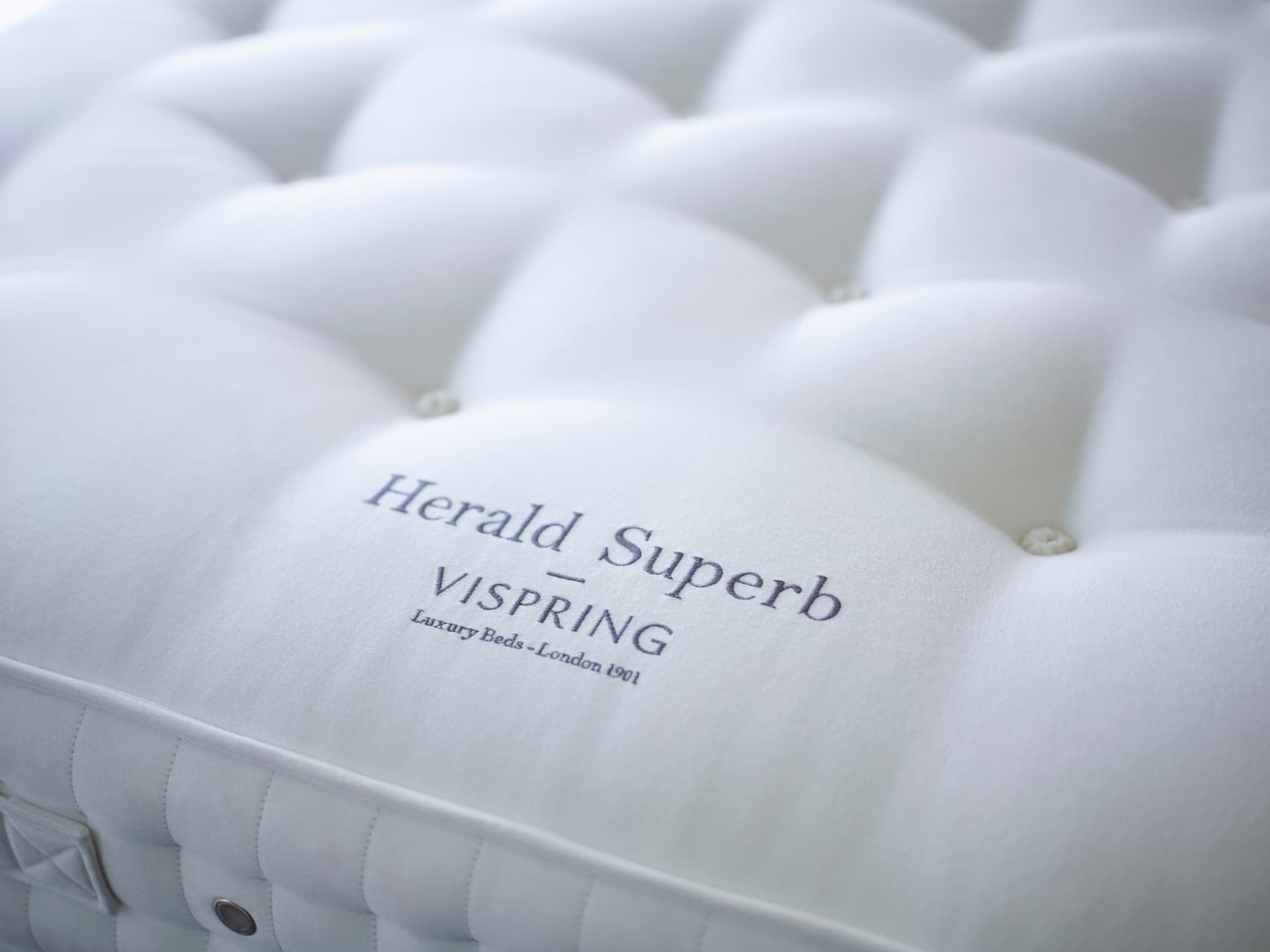
Firmness as you feel it is a combination of the spring tension beneath and the comfort layers above. A generous layer of soft fibres such as cotton, silk or cashmere makes the first touch feel plush, while a layer of resilient horsetail adds a springier, more supportive sensation near the surface.
This is why two Vispring mattresses with similar tensions can feel quite different. One may present a soft, cushioned surface over firm support; another a more tailored surface over gentler springs. When testing beds, try to distinguish what you feel at first contact from what you feel after settling. The first is mostly the comfort layers; the second is mostly the springs. Understanding both helps you describe precisely what you want.
Talking about firmness with a specialist
Many people struggle to describe what they want from a bed. Words like soft, firm, supportive and comfortable mean different things to different people. A specialist can help translate your experience into useful choices by asking specific questions: where do you feel pressure, how easily do you turn, do you feel you sink in or lie on top?
Answer honestly, even if your answers seem contradictory. It is common to want a bed that feels soft to lie on and supportive underneath, and that combination is exactly what layered natural construction is designed to offer. The more openly you describe your experience, the more precisely the specialist can guide you.
Vispring in the Philippines
Vispring has made beds by hand in Plymouth, England, since 1901, and its approach has remained remarkably consistent: pocket springs nested by hand, natural fibres laid by hand, borders side-stitched and surfaces hand-tufted, with every bed made to order. Those principles were not developed with the tropics in mind, yet they translate unusually well to the conditions of a Filipino home, where breathability, moisture management and quiet, independent support all matter night after night.
In the Philippines, Vispring is presented by Luxeroom, the official Vispring partner in Metro Manila. Rather than a conventional retail floor, Luxeroom offers private consultations by appointment, giving homeowners, couples, interior designers and architects unhurried time with the Original, Classic and Luxe collections, along with divans, headboards and toppers. A consultation is the place to translate everything in this guide into a specific choice for a specific room and a specific sleeper.
Whether you are furnishing a condominium in Makati or BGC, a family home in Alabang or Forbes Park, a retreat in Tagaytay or a villa by the sea, the same advice applies: understand how a bed is made, try it for long enough to feel what it does, and choose the one that suits the way you actually sleep. Luxeroom can also arrange a follow-up conversation over WhatsApp if you would like to continue planning after your visit.
Preparing for your consultation
A private consultation is most useful when you arrive prepared. Before your appointment, spend a few nights paying attention to how you sleep now. Notice the position you fall asleep in and the one you wake in, whether you feel warm during the night, and whether anything about your current bed bothers you. If you share your bed, ask your partner to do the same, and agree to attend together so that the bed is chosen for both of you rather than for one.
Bring practical information as well. Measurements of the bedroom, photographs of the space, details of any bed frame you plan to keep and notes on the delivery route into your home all help the conversation move from the general to the specific. If an interior designer or architect is involved, invite them, or bring their drawings. Wear comfortable clothes, allow at least an hour, and bring your usual pillow if you can. These simple preparations mean you leave with a clear sense of which beds suit you, rather than a vague impression of many.
Above all, give yourself permission to take your time. A luxury mattress is chosen for years of nightly use, and there is no virtue in deciding quickly. Lie on each bed for several minutes, return to the ones you liked, and ask every question that occurs to you. A good specialist will welcome the care you bring to the decision, because it is the same care that went into making the bed.
Getting expert guidance
Choosing tension is easier with help. A specialist can observe how you lie, ask how you sleep now and suggest models and tensions to compare.
Luxeroom, the official Vispring partner in Metro Manila, offers private consultations by appointment, giving you unhurried time to find the right support.
Mention any particular preferences or concerns about your current bed. Every detail helps narrow the choice.
Questions, answered
- Is a firm mattress better for you?
- Not automatically. The right mattress keeps your body comfortably aligned in your sleeping position, which depends on your weight, build and preference.
- What is mattress tension?
- Tension describes how a spring system responds under a particular body's weight. Vispring beds can be made in different tensions to suit the sleeper.
- What firmness suits side sleepers?
- Side sleepers often appreciate enough give for the shoulder and hip to settle comfortably. Testing in your own position is the best guide.
- Can a topper change how firm my bed feels?
- A topper can soften or refine the surface feel without changing the support of the springs beneath.