9 min read
Why fibres matter
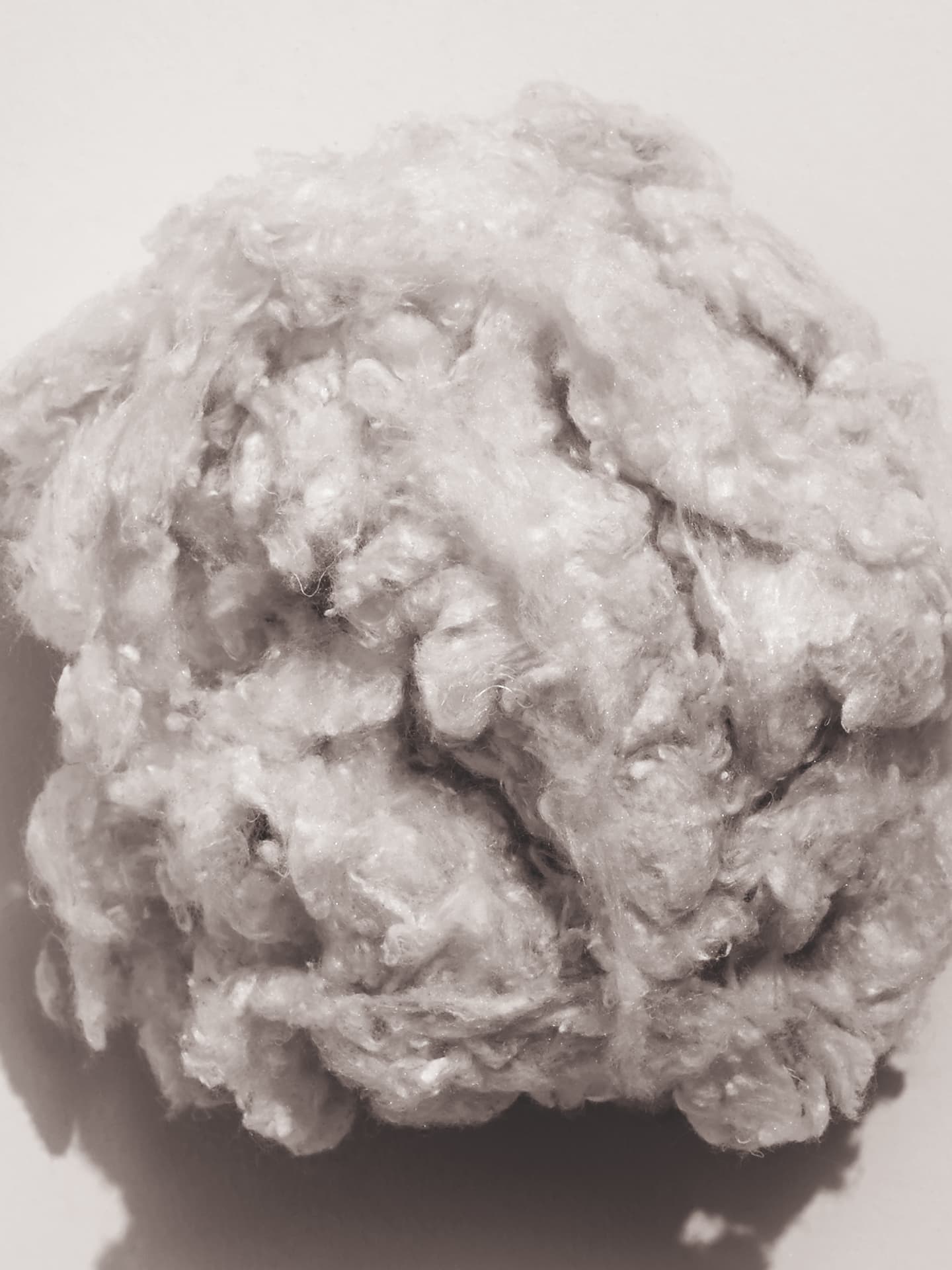
Above the springs of a handcrafted mattress lie layers of natural fibres. They create the first impression of a bed: how soft it feels, how it responds and how it breathes.
Each fibre has its own character. Some are soft, some resilient, some light and airy. By choosing and layering them, makers give each model its particular feel.
At Vispring, these fibres are laid by hand and held in place by hand tufting.
Cotton: the soft foundation
Cotton is the most familiar natural fibre in bedding. In a mattress it forms a soft, smooth comfort layer.
It is valued for its breathability and for creating an even surface between resilient fibres below and the sleeper above.
Cotton's gentle, dependable character makes it a natural partner for the more distinctive fibres it accompanies.
Wool: loft and moisture
Wool is one of the most important fibres in a natural mattress. Its crimped fibres are lofty and springy, trapping small pockets of air.
Wool can take up moisture vapour and release it again, helping the surface of the bed feel drier. In the humid nights of the Philippines, this is especially valuable.
Vispring uses wool in its comfort layers, combining it with other fibres to balance softness and resilience.
Silk: fine and airy
Silk is spun by silkworms and is prized for its smoothness and lightness. In a mattress it creates a fine, airy layer.
Many sleepers describe silk as cool and fresh, and it lends a quiet refinement to the uppermost comfort layers.
Silk appears in the more elaborate Vispring models, where it adds subtlety to the feel.
Cashmere: rare softness
Cashmere is among the most precious fibres used in bedding. It is exceptionally soft and delicate.
Cashmere is reserved for Vispring's more elaborate models, where it contributes a particular softness.
Like wool, it is a natural animal fibre, sharing a gentle relationship with warmth and moisture.
Horsetail: springy resilience
Horsetail has a long history in fine upholstery and bedding. Teased and curled, it forms a springy, open layer that holds its shape.
That openness allows air to move, complementing the springs beneath, while its resilience gives the bed a supportive feel.
Horsetail often sits deeper within the comfort layers, supporting the softer fibres above.
The art of layering
No single fibre makes a great mattress. The character of a bed comes from how fibres are combined, in what order and in what proportions.
Resilient fibres closer to the springs give structure; softer fibres nearer the surface give comfort. The balance differs from model to model.
Moving through the Original, Classic and Luxe collections, the palette of fibres becomes richer and more elaborate.
Hand laying and hand tufting
Natural fibres must be laid evenly and held in place. At Vispring, fillings are laid by hand and secured by hand tufting, which passes through the mattress to keep each layer where it was placed.
Tufting is visible as the evenly dimpled surface of a Vispring mattress. It is one of the clearest signs of handcraft.
Without it, natural fillings would shift. With it, they settle gracefully and evenly.
Where natural fibres come from
Each natural fibre has its own origin. Cotton grows on plants; wool and cashmere come from the fleece of sheep and goats; silk is spun by silkworms; horsetail comes from horses. Each must be gathered, cleaned and prepared before it can be used in a bed.
The preparation is as important as the fibre itself. Fibres must be cleaned, opened and teased so that they can be laid evenly and contribute their full character.
Understanding where fibres come from adds meaning to a handcrafted bed. It connects the mattress to farms, flocks and traditions far beyond the bedroom.
Rare fibres and the most precious beds
Among the rarest fibres in the world is vicuña, the golden fleece of a small South American camelid. It is prized for its extraordinary fineness and is used only in the most exceptional textiles.
Fibres of this kind are rare by nature, and their use in bedding is reserved for the most elaborate creations. Their presence speaks to the extremes of craftsmanship that a handmade bed can reach.
For most buyers, the more familiar natural fibres offer all the comfort and character they could wish for. Rare fibres are a reminder of how far the tradition can go.
Natural fibres and the senses
Natural fibres engage the senses differently from synthetics. Wool has a buoyant, springy quality; silk feels smooth and cool; cashmere is soft and delicate; horsetail is resilient and lively.
In a mattress, these qualities are experienced through the cover and linen, yet they shape the overall impression of the bed. Many people describe natural mattresses as feeling alive or responsive.
When you lie on beds with different fibre combinations, try to notice these sensory differences.
Natural fibres in a humid climate
In the Philippines, humidity is the defining condition of the bedroom. Natural fibres respond to moisture in useful ways: wool can take up moisture vapour and release it again, and open fibres such as horsetail allow air to move.
A well-made natural mattress therefore works with the climate rather than against it. Regular airing and a breathable protector help the fibres continue to perform.
Our cooling mattress guide explores this in depth.
How fibres change with use
Natural fibres settle gently as they are used, conforming slightly to their owner. This is part of the character of a handcrafted mattress, not a flaw.
Hand tufting keeps each layer in place, and turning or rotating the mattress as advised helps the fibres settle evenly across the bed.
With simple care, natural fibres continue to provide comfort and resilience for many years.
Wool in depth
Of all the natural fibres used in bedding, wool is perhaps the most versatile. Each fibre has a natural crimp, a gentle wave that gives wool its springiness and loft. When many fibres lie together, this crimp traps countless small pockets of air, creating a layer that cushions while remaining buoyant. Wool also has a well-known relationship with moisture: it can take up moisture vapour and release it again, which helps a bed feel drier than the surrounding air might suggest.
Different wools bring different qualities, depending on the breed of sheep and the region where they are raised. In a mattress, wool is often used in several layers, sometimes blended with other fibres, to give both comfort and structure. For sleepers in the Philippines, wool's relationship with moisture makes it a particularly valuable partner in the comfort layers of a bed.
Horsetail in depth
Horsetail has a heritage in fine upholstery that stretches back generations. Long strands are twisted, curled and then teased open, creating a material with remarkable spring and resilience. Laid into a mattress, curled horsetail forms an open, lively layer that holds its shape and recovers after compression.
Its openness is just as important as its resilience. Air moves easily through a horsetail layer, complementing the breathing action of the pocket springs below. Horsetail is therefore often placed deeper in the comfort layers, giving structure and airflow beneath the softer fibres that sit nearer the surface. Its presence is one of the hallmarks of a traditionally made luxury mattress.
Silk and cashmere in depth
Silk and cashmere are the fibres most often associated with luxury, and in a mattress they contribute refinement rather than structure. Silk, spun by silkworms, is smooth, fine and light; in a comfort layer it adds an airy softness that many sleepers describe as fresh and cool. Cashmere, gathered from the soft undercoat of goats, is exceptionally fine and delicate, adding a particular plushness.
Because these fibres are precious, they are reserved for Vispring's more elaborate models, where they are layered with wool, cotton and horsetail to create a rich, nuanced surface. They are a large part of what gives the Luxe Collection its distinctive depth of comfort.
Choosing fibres for the way you sleep
Warm sleepers often appreciate generous wool and open horsetail layers, which let moisture and air move. People who love a plush first touch tend to enjoy the silk and cashmere in the more elaborate models. Those who want a lively, supportive surface often prefer constructions where resilient fibres sit closer to the top. Bring these preferences to your consultation and ask how each model is layered.
Vispring in the Philippines
Vispring has made beds by hand in Plymouth, England, since 1901, and its approach has remained remarkably consistent: pocket springs nested by hand, natural fibres laid by hand, borders side-stitched and surfaces hand-tufted, with every bed made to order. Those principles were not developed with the tropics in mind, yet they translate unusually well to the conditions of a Filipino home, where breathability, moisture management and quiet, independent support all matter night after night.
In the Philippines, Vispring is presented by Luxeroom, the official Vispring partner in Metro Manila. Rather than a conventional retail floor, Luxeroom offers private consultations by appointment, giving homeowners, couples, interior designers and architects unhurried time with the Original, Classic and Luxe collections, along with divans, headboards and toppers. A consultation is the place to translate everything in this guide into a specific choice for a specific room and a specific sleeper.
Whether you are furnishing a condominium in Makati or BGC, a family home in Alabang or Forbes Park, a retreat in Tagaytay or a villa by the sea, the same advice applies: understand how a bed is made, try it for long enough to feel what it does, and choose the one that suits the way you actually sleep. Luxeroom can also arrange a follow-up conversation over WhatsApp if you would like to continue planning after your visit.
Preparing for your consultation
A private consultation is most useful when you arrive prepared. Before your appointment, spend a few nights paying attention to how you sleep now. Notice the position you fall asleep in and the one you wake in, whether you feel warm during the night, and whether anything about your current bed bothers you. If you share your bed, ask your partner to do the same, and agree to attend together so that the bed is chosen for both of you rather than for one.
Bring practical information as well. Measurements of the bedroom, photographs of the space, details of any bed frame you plan to keep and notes on the delivery route into your home all help the conversation move from the general to the specific. If an interior designer or architect is involved, invite them, or bring their drawings. Wear comfortable clothes, allow at least an hour, and bring your usual pillow if you can. These simple preparations mean you leave with a clear sense of which beds suit you, rather than a vague impression of many.
Above all, give yourself permission to take your time. A luxury mattress is chosen for years of nightly use, and there is no virtue in deciding quickly. Lie on each bed for several minutes, return to the ones you liked, and ask every question that occurs to you. A good specialist will welcome the care you bring to the decision, because it is the same care that went into making the bed.
Feeling the fibres in person
Descriptions only go so far. The best way to understand natural fibres is to lie on beds with different combinations.
Luxeroom, the official Vispring partner in Metro Manila, offers private consultations by appointment, where you can experience the collections and learn how each is layered.
Our materials page shows each fibre in detail.
Questions, answered
- What fibres are used in Vispring mattresses?
- Natural fibres including cotton, wool, silk, cashmere and horsetail, combined differently from model to model.
- Why is wool used in mattresses for hot climates?
- Wool can take up moisture vapour and release it again, helping the bed surface feel drier on humid nights.
- What does horsetail do in a mattress?
- Teased and curled, horsetail forms a springy, open layer that adds resilience and allows air to move.
- What is hand tufting?
- A hand-finishing technique that passes through the mattress to keep each layer of filling in place, visible as an evenly dimpled surface.